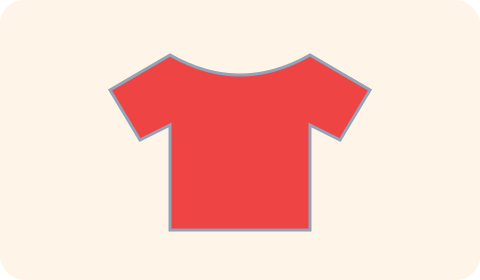

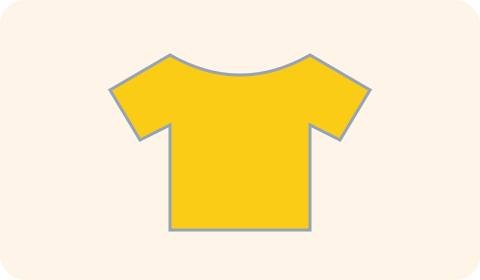

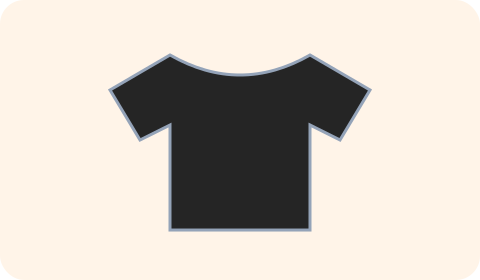

Keep the garment constant and change its color
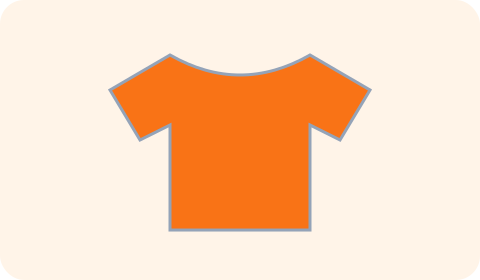
This unit uses eight shirt pictures to connect color vocabulary with a familiar garment. The phrases cover red, blue, yellow, green, black, white, purple and orange shirts. Because the object stays a shirt, you can compare the color word without learning a new clothing noun in every row. 衬衫, chènshān, is the garment name in these phrases. Its two characters belong together as the ordinary word for a shirt of this type. The colored illustration is an example, not a claim that shirts normally have that color. Read the full caption so that the color, the garment and the English meaning remain connected as one phrase.
Put the color before the clothing noun
A color description normally appears before the noun it modifies. 红衬衫 therefore identifies a red shirt, with 红 describing 衬衫. You will also encounter longer forms such as 红色的衬衫. 色 makes the color expression explicit, and 的 connects that description to the noun. Both patterns are useful, but deleting 的 from every adjective phrase is not a safe general rule. The captions retain forms such as 红色衬衫 without 的; 红衬衫 is a shorter alternative, while a full sentence can use a longer phrase when it helps the description. Compare the order with English red shirt, then pay attention to the Chinese linking word when the description becomes longer or more specific.
Count shirts with 件 and use 两 for two
衣服 is a broad word for clothes, and 件 is a common classifier for an individual garment such as a shirt. 一件红衬衫 means one red shirt; 两件红衬衫 means two. The color description stays between the classifier and the clothing noun. In these ordinary counting phrases, 两 is the natural form of two. The noun 衬衫 does not acquire a plural ending when the quantity changes. This does not mean 件 works with all clothing and accessories. Shoes and socks are commonly counted in pairs with 双, and trousers commonly use 条. Learning 一件衬衫 as a complete combination helps you avoid extending a shirt classifier to every item in a wardrobe.
Distinguish wearing clothes from describing their color
穿 is the useful basic verb for putting on or wearing clothing, as in 我穿蓝衬衫. 穿着 can describe the ongoing state of having something on, as in 他穿着白衬衫. A sentence about color uses a different structure. 这件衬衫是蓝色的 identifies this shirt as blue; 蓝色 describes the garment rather than an action performed by the person. Do not put 是 directly before every Chinese adjective merely because English uses is. Compare a clothing noun phrase with a full statement about a garment, and decide whether you are naming the item, describing its appearance or saying what somebody is wearing. That choice determines the useful sentence pattern.
Watch the sounds in green and orange
绿 is lǜ, with a vowel that is different from the u in words such as 不. The two dots in the pinyin are part of the vowel spelling. 橙 is chéng, so an orange shirt is described with a color word rather than by naming the fruit 橘子. Purple uses 紫, zǐ, while white uses 白, bái. These small sound differences become easier to notice when the garment stays unchanged. 黑 and 红 also begin with the same pinyin letter but have different finals and tones. Listen to the full phrase, then repeat the color by itself and reconnect it to 衬衫. Color recognition alone does not guarantee that the spoken syllable is accurate.
Choose between two shirts in a real sentence
Imagine two shirts on a table and use the color to identify the one you mean. 我要红色的 can mean I want the red one when the shared context already makes the omitted noun clear. Without that context, include 衬衫 so the listener knows what is being selected. You can also ask 你喜欢哪件衬衫 to ask which shirt someone likes. Answer with a color phrase, then add a quantity if more than one shirt is involved. The picture examples describe solid colors; a real garment may have stripes, several colors or a print. Use these captions as the foundation for a description, while remembering that a simple color name does not describe every detail of a garment. A size description answers a different question from a color description. If two red shirts are different sizes, saying 红色 alone may not identify the correct one. Add the size or point to the particular garment.