Chinese Breakfast · 早餐

1 / 12Score 0
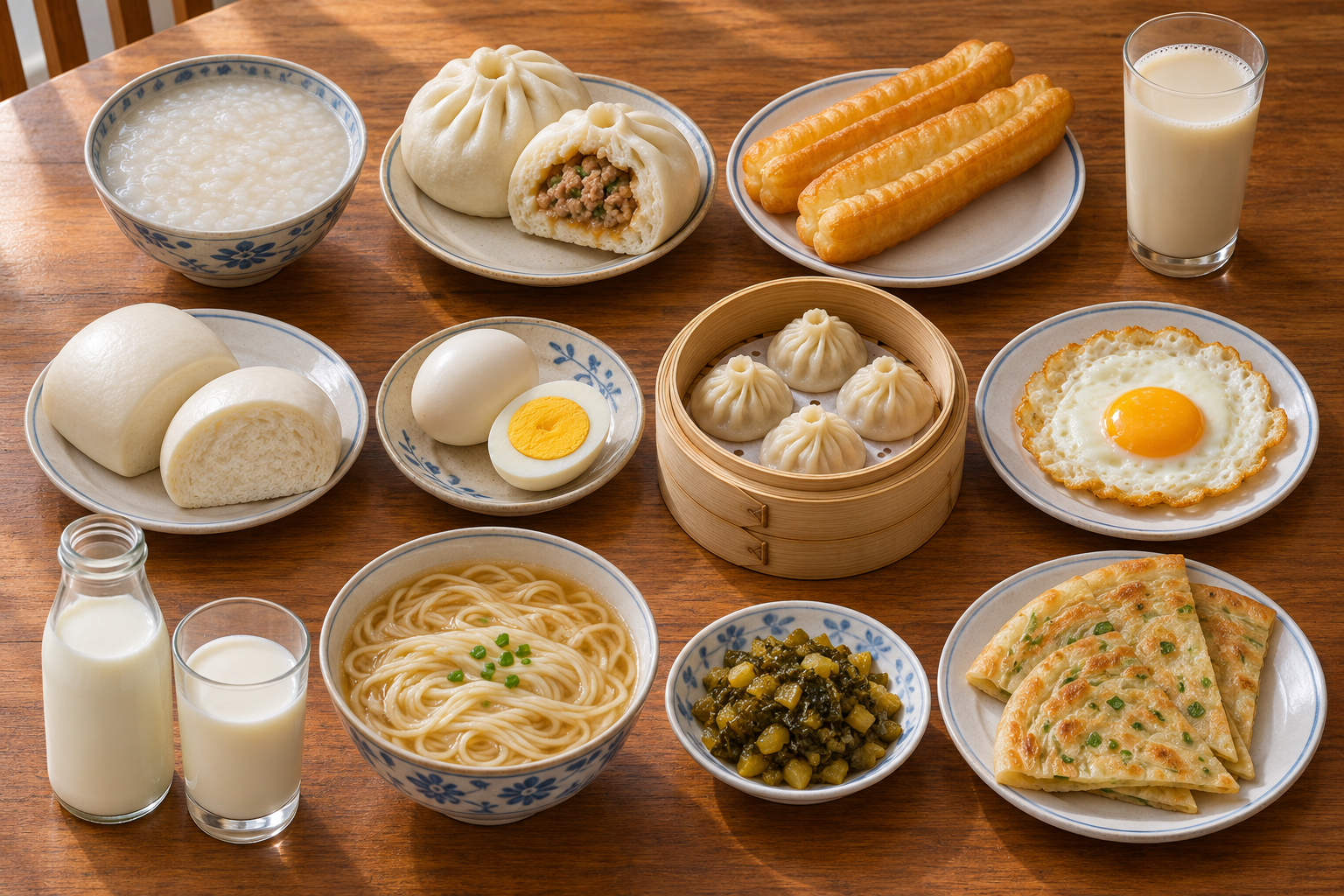
A breakfast table with congee, baozi, youtiao, soy milk, mantou, boiled eggs, xiaolongbao, a fried egg, milk, noodles, pickles and scallion pancakes.
Which breakfast food or drink is inside the red frame? Type its name in Chinese.

SAY IT IN CHINESE

congee

Type Chinese characters or pinyin.

Chinese breakfast includes many different foods, from a quick steamed bun and drink to a bowl of noodles or congee. This lesson brings twelve useful names together on one table. Use the red frame to identify an item, then compare the name with its example sentence. The meal is a vocabulary scene, not a recommended portion or a claim about what every family eats. Three real photographs further down show actual foods and familiar combinations. Notice how cooking and serving change the name: an egg is 鸡蛋, while a fried egg can be 煎蛋. Learning both lets you ask for the preparation you want.

Picture vocabulary
PictureChinesePinyinEnglishExample sentence
粥zhōucongee

这碗粥有点烫。

Zhè wǎn zhōu yǒu diǎn tàng.

This bowl of congee is a little hot.

包子bāozistuffed steamed bun

我要两个包子。

Wǒ yào liǎng ge bāozi.

I would like two steamed buns.

油条yóutiáofried dough stick

油条要趁热吃。

Yóutiáo yào chèn rè chī.

Eat the fried dough sticks while they are hot.

豆浆dòujiāngsoy milk

请给我一杯热豆浆。

Qǐng gěi wǒ yì bēi rè dòujiāng.

Please give me a cup of hot soy milk.

馒头mántouplain steamed bun

这个馒头没有馅儿。

Zhè ge mántou méiyǒu xiànr.

This steamed bun has no filling.

鸡蛋jīdànegg

我早上吃了一个鸡蛋。

Wǒ zǎoshang chī le yí ge jīdàn.

I ate an egg this morning.

小笼包xiǎolóngbāosoup dumpling

小笼包里的汤很烫。

Xiǎolóngbāo lǐ de tāng hěn tàng.

The soup inside the dumplings is very hot.

煎蛋jiāndànfried egg

我想要一个煎蛋。

Wǒ xiǎng yào yí ge jiāndàn.

I would like a fried egg.

牛奶niúnǎimilk

牛奶在杯子里。

Niúnǎi zài bēizi lǐ.

The milk is in the glass.

面条miàntiáonoodles

我早饭吃面条。

Wǒ zǎofàn chī miàntiáo.

I eat noodles for breakfast.

咸菜xiáncàipickled vegetables

配粥吃一点咸菜。

Pèi zhōu chī yì diǎn xiáncài.

Have a little pickled vegetable with the congee.

葱油饼cōngyóubǐngscallion pancake

这张葱油饼很香。

Zhè zhāng cōngyóubǐng hěn xiāng.

This scallion pancake smells delicious.

Listen uses a Mandarin voice available in your browser or on your device. If no voice is available, the pinyin and examples remain available to read.

量词怎么配 · Choosing measure words

Order 一杯豆浆 (yì bēi dòujiāng), a cup of soy milk; 一个包子 (yí ge bāozi), a filled steamed bun; or 一根油条 (yì gēn yóutiáo), a fried dough stick. The container supplies the unit for the drink, while 个 counts a bun and 根 suits the long dough stick. A bowl of congee is 一碗粥, and a bowl of noodles is 一碗面条. Small dumplings are often sold by the steamer: 一笼小笼包 asks for a basket, whose exact number depends on the shop. For two items, 两 is usual before the classifier, as in 两个包子. The written numeral 一 changes pronunciation before different following tones, which is why the examples show both yì and yí. The food noun itself stays the same when the quantity changes.

在中文里怎么用 · Using these words in Chinese

早餐 (zǎocān) is a general name for breakfast, often seen in signs, menus and writing. 早饭 (zǎofàn) is especially common in everyday conversation. Both refer to the morning meal; neither requires rice, even though 饭 can mean cooked rice in another context. 我早饭吃面条 is a natural way to say that you eat noodles for breakfast. 早餐 is not restricted to writing, and 早饭 is not a different kind of meal. 你吃早饭了吗 (Nǐ chī zǎofàn le ma?) asks whether someone has had breakfast. Around breakfast time it is a familiar way to check in with someone you know, but it is not a universal replacement for hello in every situation. 已经吃了 means you have already eaten, and 还没吃 means you have not eaten yet. The question is about the meal having happened, rather than the exact food. If you want the menu, ask 你早饭吃什么, what do you eat for breakfast? Use 吃 with buns, eggs and noodles, and 喝 with soy milk or dairy milk. 喝粥 is also a common expression: Chinese treats spoonable porridge differently from an English rule about drinking only beverages. In an order, 我要一杯豆浆 is enough; you do not need to insert a verb meaning drink. Add 热的 or 冰的 to specify hot or iced when those options are available. A food name alone may not tell you the filling, sweetness or cooking method, so ask a short follow-up rather than assuming the picture covers every version.

Baozi, mantou and xiaolongbao are different requests

In the common Mandarin distinction used here, 包子 are filled steamed buns and 馒头 is plain steamed bread without a filling. Some regional naming traditions differ, so a local menu may need clarification. 小笼包 are small buns or dumplings cooked in a small steamer; the thin-skinned soup-filled variety shown here is a familiar example. Not every food named 小笼包 has exactly the same wrapper or amount of soup. 鸡蛋 names the ingredient egg, while 煎蛋 specifies frying. The boiled eggs illustrate 鸡蛋 without claiming that the word means boiled. 豆浆 comes from soybeans; 牛奶 is dairy milk. Their colors may look similar in a photograph, so context and the name matter. 咸菜 is a broad name for salted or pickled vegetables, not one fixed recipe.

From a picture to a useful sentence

Build a short order from one food and one drink: 我要两个包子和一杯豆浆, I would like two buns and a cup of soy milk. Then change the food to 油条 and choose its classifier. Read the request aloud before returning to the picture. For a conversation at home, describe what is already on the table with 有: 桌上有牛奶和鸡蛋 means there are milk and eggs on the table. Compare that with 我想吃面条, which expresses what you want to eat. These different sentence patterns let the same vocabulary do useful work without changing the noun into a plural or adding an English-style article.
中国人的早餐长什么样 · What does a Chinese breakfast look like?

There is no single breakfast eaten by everyone in China. Region, household routines, time and personal preference all matter. These real photographs show three familiar possibilities, rather than a required menu. A person might buy a bun and soy milk on the way to work, sit down to congee, or eat leftovers at home. Noodles, pancakes and eggs can also belong at the breakfast table. The practice scene deliberately gathers twelve foods together so you can learn their names; it is not a claim that one person normally eats all twelve in a morning.

The practice scene is an AI-generated learning illustration. The photographs below show real food.

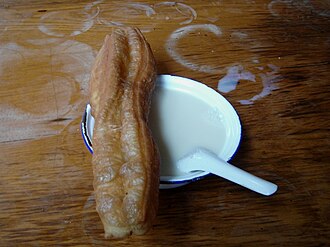
Soy milk and fried dough sticks

Soy milk and fried dough sticks

豆浆 and 油条 are a familiar pairing. The long dough sticks are fried, rather than steamed like a bun, and people may dip them into the drink. Soy milk can be sweetened or unsweetened; savory preparations also exist. The words name two separate things, so you can order the drink without ordering the dough sticks.

Photo source: (WT-shared) Shoestring · Public domain

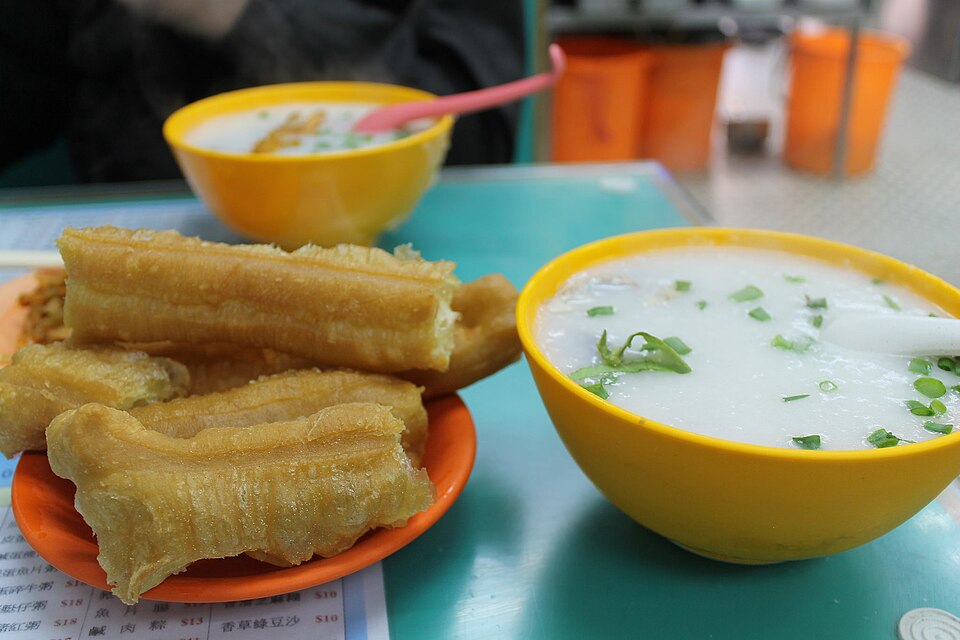
Congee with something crisp

Congee with something crisp

A bowl of 粥 provides a soft, spoonable base, while 油条 adds a contrasting texture. Congee may be plain or cooked with other ingredients; the word does not specify one topping. Some people eat small salty side dishes with plain congee. Ask what is in the bowl instead of assuming that every pale porridge has the same ingredients.

Photo source: Connie Ma · CC BY-SA 2.0

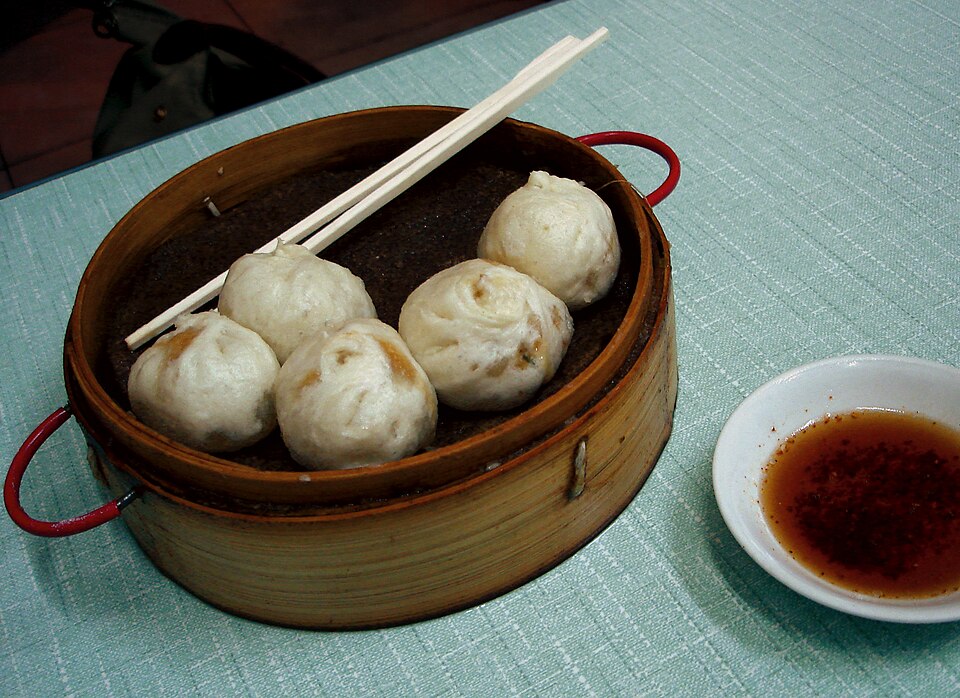
Filled steamed buns

Filled steamed buns

包子 have a filling enclosed in steamed dough. The photograph shows buns in a Beijing restaurant, not a complete daily breakfast prescription. Fillings vary, so 肉包子 means meat buns while 菜包子 describes vegetable-filled buns. 馒头 in this lesson means plain steamed bread without a filling. Check the menu or ask when a local name is unfamiliar.

Photo source: Neonstar; Rainer Zenz · CC BY-SA 3.0

Frequently asked questions

How do you say breakfast in Chinese?

早餐 (zǎocān) and 早饭 (zǎofàn) both mean breakfast. 早餐 is common on menus and in writing; 早饭 is especially common in everyday conversation.

How do you ask whether someone has eaten breakfast?

Say 你吃早饭了吗 (Nǐ chī zǎofàn le ma?). It is a familiar breakfast-time check-in. 已经吃了 means already eaten; 还没吃 means not yet.

What do people eat for a Chinese breakfast?

Choices vary by region and household. Familiar options include congee, steamed buns, fried dough sticks, soy milk, eggs, noodles and pancakes. There is no single menu everyone eats.

What is the difference between 包子 and 馒头?

In the common Mandarin distinction used in this lesson, 包子 have a filling and 馒头 is plain steamed bread without one. Regional naming can differ.

Do you say 吃粥 or 喝粥?

喝粥 is a common expression for having congee. Use 吃 for buns, eggs and noodles, and 喝 for soy milk and dairy milk. An order such as 我要一碗粥 does not need either verb.

Keep learning food words