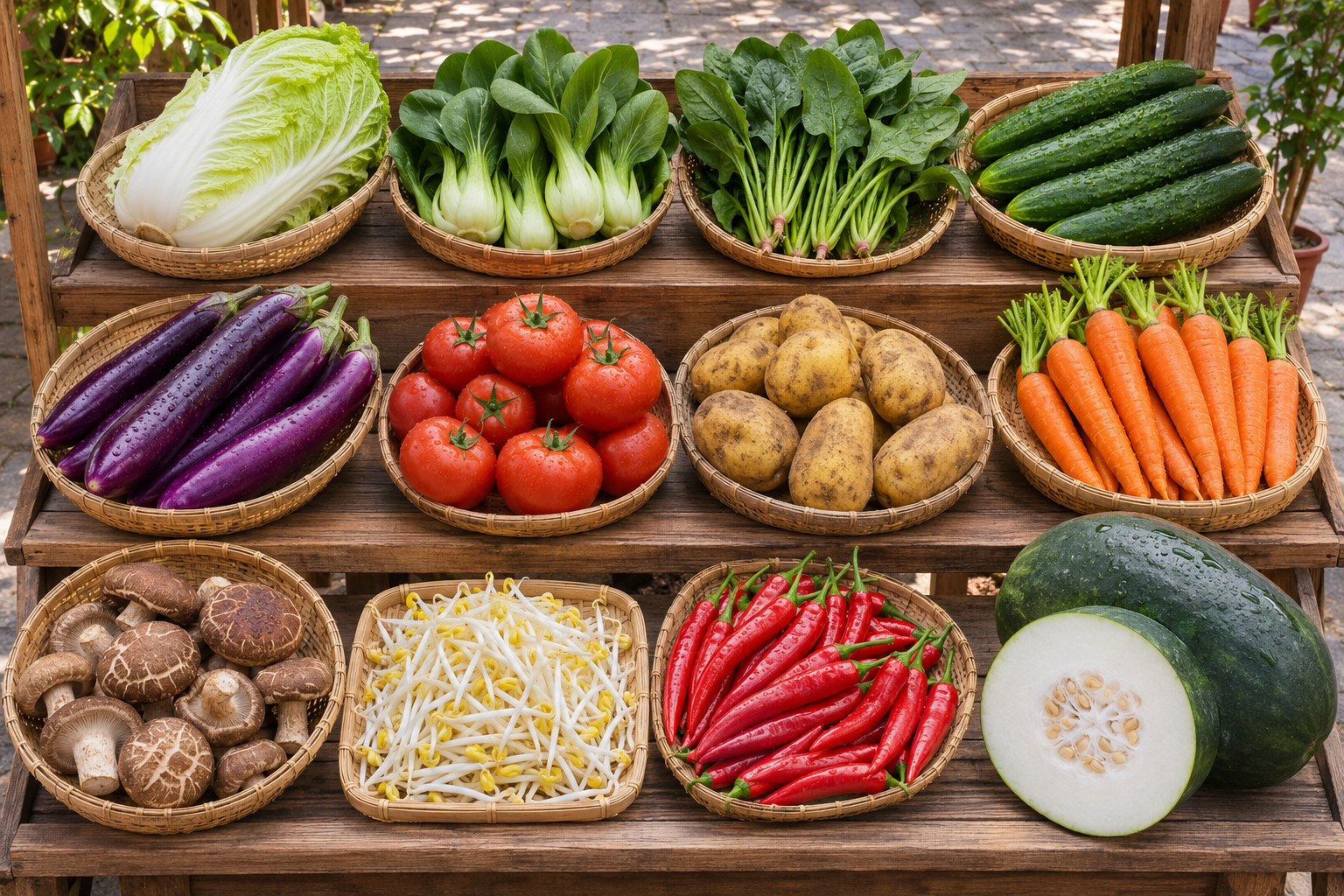
量词怎么配 · Choosing measure words
Put a classifier between a number and a vegetable when counting individual items: 一颗白菜 (yì kē báicài), a head of napa cabbage; 一把青菜 (yì bǎ qīngcài), a bunch of greens; 一根黄瓜 (yì gēn huángguā), a cucumber; 一个西红柿 (yí ge xīhóngshì), a tomato; and 一朵蘑菇 (yì duǒ mógu), a mushroom. These combinations describe different ways of seeing the ingredient: a compact head, a handful, a long object or a single item. They are useful conventions, not a rule that every vegetable has only one possible classifier. At a stall, weight may be more useful: 一斤土豆 requests a jin of potatoes. In mainland China a 市斤 is 500 grams. Do not assume that units called jin have the same weight everywhere. A cut piece of winter melon can be 一块冬瓜 rather than a whole melon.
在中文里怎么用 · Using these words in Chinese
菜 (cài) can name vegetables or a prepared dish. 买菜 often means shopping for vegetables or groceries, while 点菜 means ordering dishes in a restaurant. In 这道菜很好吃, 这道菜 is this dish, not this single raw vegetable. 道 counts a prepared dish; it does not replace 根 when you are counting cucumbers at a market. The setting and the classifier help you choose the intended meaning. 青菜 (qīngcài) is not a precise botanical label. It can broadly refer to green leafy vegetables, and in some places it commonly points to a particular local green, such as the bok choy pictured here. A shop elsewhere may use the same word more broadly. If you need a specific ingredient, point to it, describe its leaves, or ask 这是什么菜, meaning what vegetable is this? 白菜 and 菠菜 are different names, so sharing the final character 菜 does not make them interchangeable. Vegetable names usually stay unchanged after numbers: 两根黄瓜 still uses 黄瓜, without an English-style plural ending. You can also talk about the ingredient without counting it, as in 我喜欢吃茄子. 吃 is followed directly by the food when no quantity is needed. For cooking, 洗 means wash, 切 means cut, 炒 means stir-fry and 煮 means boil or cook in liquid. A dish name such as 西红柿炒鸡蛋 combines ingredients with a cooking word. Recognizing those parts helps you read a menu, but the full dish name still matters.
One ingredient can have more than one everyday name
西红柿 and 番茄 both name tomatoes. 土豆 is a common mainland Mandarin word for potato, while 马铃薯 is another widely used name; regional usage can make a shopping conversation less predictable than a bilingual list suggests. 胡萝卜 is a carrot, not simply any 萝卜: white radish is commonly called 白萝卜. 蘑菇 is a general mushroom name, while the brown mushrooms in the picture can more specifically be called 香菇. This lesson accepts that more specific answer too. The picture of 冬瓜 includes a cut face because the pale flesh and seeds help distinguish it from another dark-skinned gourd. The word 冬 does not mean the vegetable must only be available in winter. Learn the established name as a whole.
From a picture to a useful sentence
Begin with a shopping request: 我要一根黄瓜, I would like a cucumber. Change only the vegetable and its classifier, then read the complete sentence again. Next describe a cooking step: 洗青菜, 切土豆 or 煮冬瓜汤. You do not need to add a classifier every time you mention an ingredient; use one when you specify a count or serving. Finally, compare a raw item with a finished dish. A tomato can become part of a stir-fry, but the restaurant order refers to the prepared dish as a whole. The examples use ordinary kitchen and shopping situations so that the names connect to actions, not only to isolated pictures.