Chinese Fruits · 水果

1 / 12Score 0
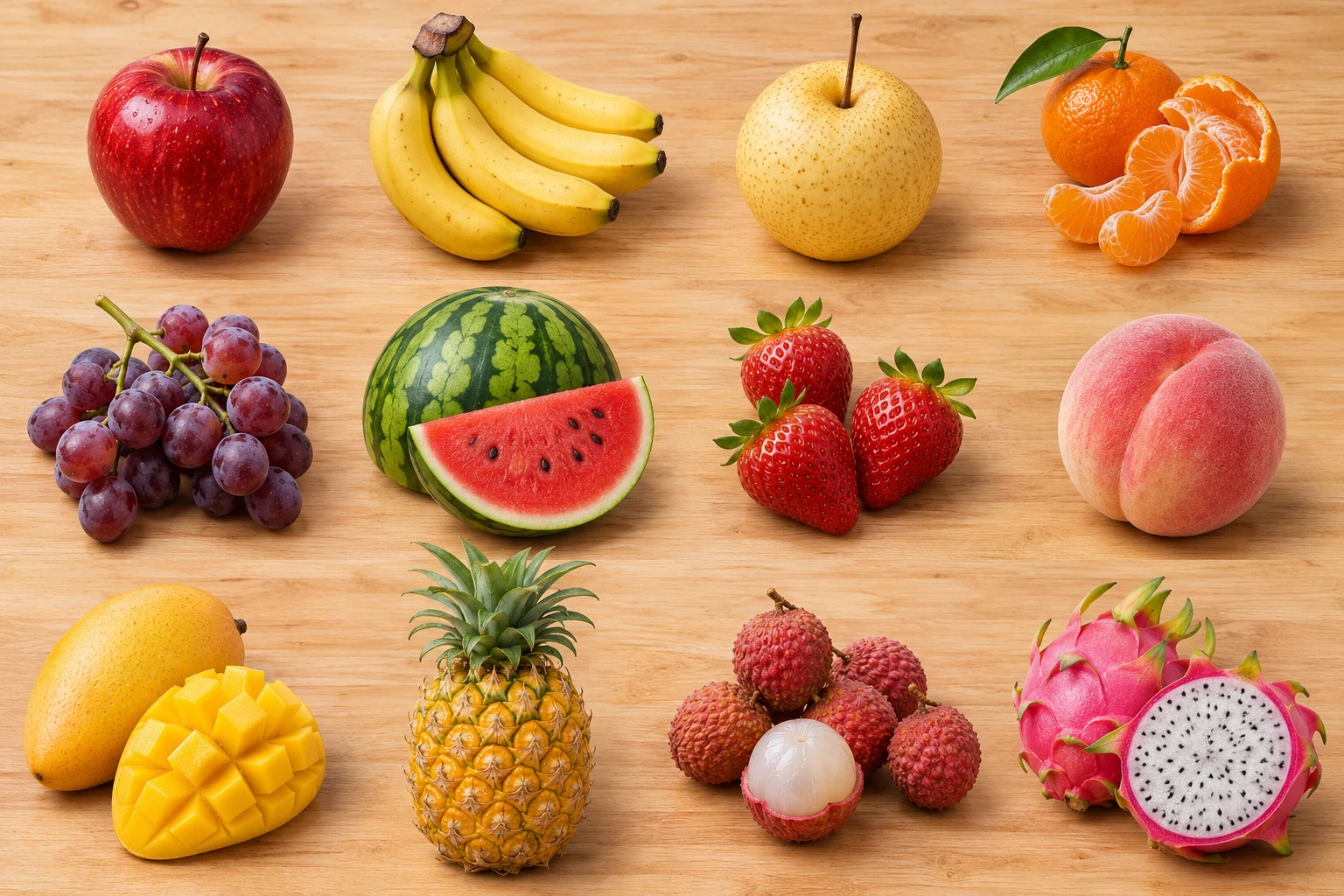
Twelve fruit groups on a wooden market table, including a partly peeled mandarin, purple grapes, a red watermelon wedge, lychees and a cut dragon fruit.
Which fruit is inside the red frame? Type its Mandarin name.

SAY IT IN CHINESE

apple

Type Chinese characters or pinyin.

At a fruit stall, you can often point to what you want. Add a few words and you can ask for the whole watermelon, a single slice, or enough grapes to share. Start with 水果 (shuǐguǒ), the general word for fruit. When the red frame appears, give the name of the fruit itself. Read each example aloud after the quiz. Notice which speakers are shopping for fruit and which are already at home preparing it.

Picture vocabulary
PictureChinesePinyinEnglishExample sentence
苹果píngguǒapple

我把苹果切成两半。

Wǒ bǎ píngguǒ qiē chéng liǎng bàn.

I cut the apple in half.

香蕉xiāngjiāobanana

我带了一根香蕉去上学。

Wǒ dài le yì gēn xiāngjiāo qù shàngxué.

I took a banana to school.

梨lípear

这个梨又脆又甜。

Zhège lí yòu cuì yòu tián.

This pear is crisp and sweet.

橘子júzimandarin orange

我分给你一瓣橘子。

Wǒ fēn gěi nǐ yí bàn júzi.

I’ll share a segment of my mandarin with you.

葡萄pútaograpes

请帮我称一下这串葡萄。

Qǐng bāng wǒ chēng yíxià zhè chuàn pútao.

Could you weigh this bunch of grapes for me?

西瓜xīguāwatermelon

我想吃一块西瓜。

Wǒ xiǎng chī yí kuài xīguā.

I’d like a piece of watermelon.

草莓cǎoméistrawberry

我洗了几颗草莓。

Wǒ xǐ le jǐ kē cǎoméi.

I washed a few strawberries.

桃子táozipeach

这个桃子摸起来软软的。

Zhège táozi mō qǐlái ruǎnruǎn de.

This peach feels soft to the touch.

芒果mángguǒmango

你想在酸奶里加点芒果吗?

Nǐ xiǎng zài suānnǎi li jiā diǎn mángguǒ ma?

Would you like some mango in your yogurt?

菠萝bōluópineapple

这盘菠萝已经切好了。

Zhè pán bōluó yǐjīng qiēhǎo le.

This plate of pineapple has already been cut up.

荔枝lìzhīlychee

我剥了一颗荔枝。

Wǒ bāo le yì kē lìzhī.

I peeled a lychee.

火龙果huǒlóngguǒdragon fruit

这个火龙果里面是白色的。

Zhège huǒlóngguǒ lǐmiàn shì báisè de.

This dragon fruit is white inside.

Listen uses a Mandarin voice available in your browser or on your device. If no voice is available, the pinyin and examples remain available to read.

量词怎么配 · Choosing measure words

一个苹果 (yí ge píngguǒ) is one apple. For the long, curved shape of a banana, try 一根香蕉 (yì gēn xiāngjiāo). Grapes are a good way to hear how the quantity changes with the measure word. 一串葡萄 (yí chuàn pútao) is a bunch still hanging together on its stem. 一颗葡萄 (yì kē pútao) is a single grape. 一瓣橘子 (yí bàn júzi) is one of the natural segments you can pull apart with your fingers. 一块西瓜 (yí kuài xīguā) is a piece cut from a watermelon. If you need the whole melon, ask for 一个西瓜.

在中文里怎么用 · Using these words in Chinese

Imagine you and a friend are choosing fruit for lunch. To ask about a preference, say 你喜欢吃什么水果? Your friend can answer 我喜欢吃芒果. 喜欢吃 describes what they generally enjoy eating. If you are deciding what to put on the table right now, ask 你想吃什么水果? The answer 我想吃芒果 tells you what sounds good on this occasion. The fruit name stays in the same place in both replies. When you reach the stall, point to the grapes and ask 这串葡萄多少钱? That asks for the price of this particular bunch. If the fruit is sold by weight, ask 葡萄多少钱一斤? to get the price per jin. Once you know the price, say 我要这串葡萄 to choose the bunch in front of you. You can use 这 to point out a specific piece of fruit in the same way. Compare 我要一个梨, which asks for a pear, with 我要这个梨, which picks out this one. At home you can describe what happens to each fruit. Say 洗草莓 when you rinse strawberries, 剥橘子 when you peel a mandarin, and 切西瓜 when you cut watermelon. A friend who asks 甜不甜? wants to know whether the fruit is sweet. Try 有点儿酸 if it tastes a little sour. Offer a taste with 尝一颗吧 when you are holding out a grape, or 尝一块吧 when you are offering a piece of watermelon.

橘子和橙子 · Mandarins and oranges

Look for the partly peeled fruit in the top row. The loose skin and separate segments are clues to 橘子 (júzi), a mandarin. You may also see it written 桔子, pronounced the same way in this fruit name. 橙子 (chéngzi) usually refers to a sweet orange, such as a navel orange. If an English shopping list just says “oranges,” you can ask 橘子还是橙子? to find out which kind someone wants. 橙色 (chéngsè) names the color orange. It can describe the peel without identifying the fruit.

From a picture to a useful sentence

Set up a fruit stall with a partner. The shopper chooses a quantity without touching the picture and asks for 一串葡萄, 一根香蕉 or 一块西瓜. The seller points to the matching fruit and repeats the order. For the next round, cover the English names and make the seller ask a follow-up question. If the shopper simply says 我要西瓜, the seller can ask 要整个的,还是切一块? The answer tells the seller whether to hand over the melon or pick up a knife. At home, use the same game with fruit you actually have in the kitchen.

Frequently asked questions

How do you say “fruit” in Mandarin Chinese?

Say 水果 (shuǐguǒ). To ask which fruit someone likes to eat, say 你喜欢吃什么水果? They can answer with a specific name, as in 我喜欢吃芒果, “I like eating mangoes.”

How do I ask for a bunch of grapes or a single grape?

Ask for 一串葡萄 to get a bunch. Use 一颗葡萄 for one grape. The noun 葡萄 stays the same as you change the measure word.

Does 橘子 mean a mandarin or a sweet orange?

The pictured mandarin is 橘子 (júzi), also written 桔子. A sweet orange such as a navel orange is usually called 橙子 (chéngzi). 橙色 is the name of the color.

How do I ask for a piece of watermelon?

Say 我要一块西瓜, “I’d like a piece of watermelon.” For a whole watermelon, ask for 一个西瓜. To offer someone a taste of a cut piece, say 尝一块吧.

How do I ask the price of fruit at a market?

Point to the bunch and ask 这串葡萄多少钱? for its price. When the price is given by weight, 葡萄多少钱一斤? asks how much a jin of grapes costs.

Keep learning food words