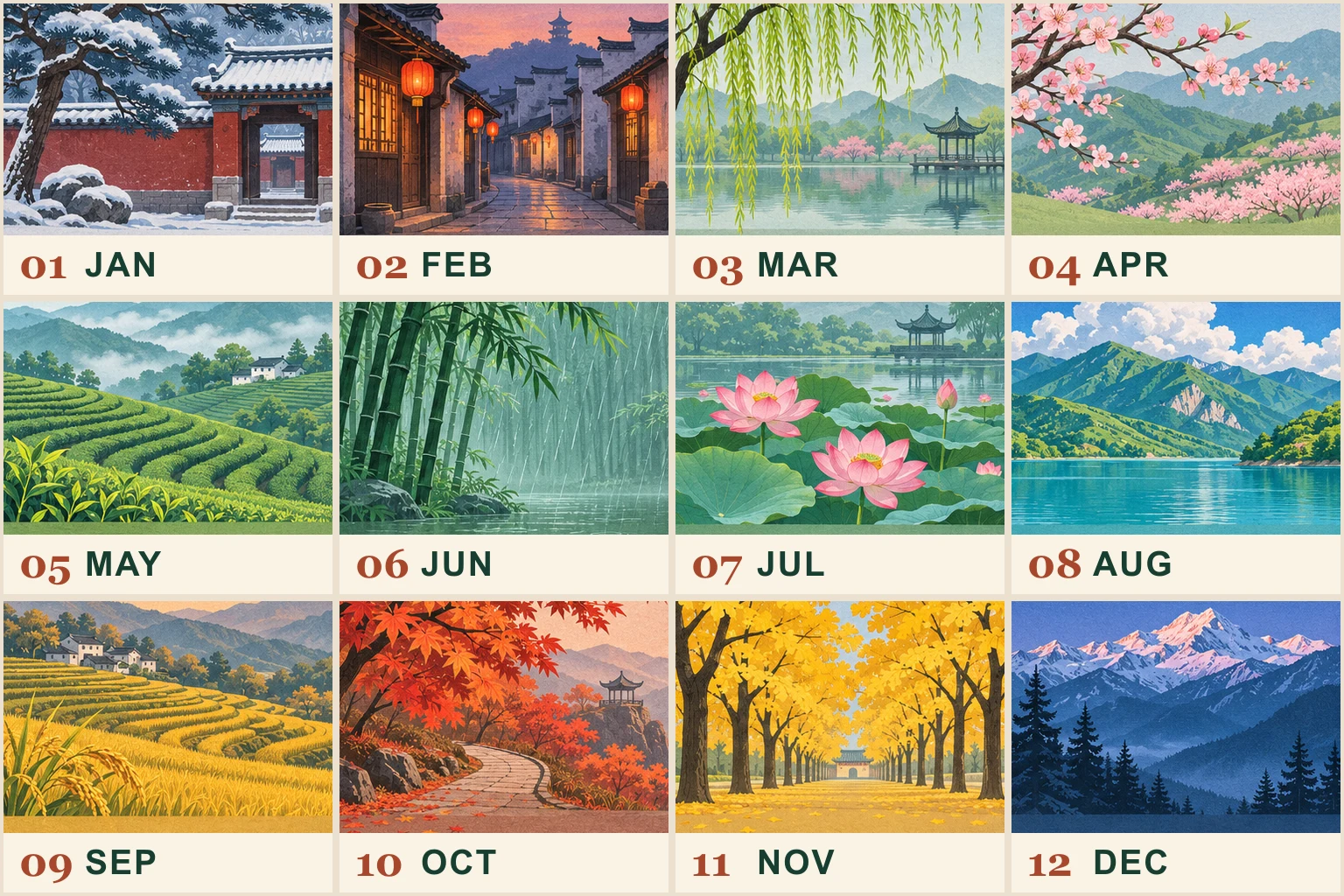











月份和时长 · Months and durations
On a Gregorian calendar, a number directly before 月 names the month. 一月 (yī yuè) is January, and 二月 (èr yuè) is February. To say how long something lasts, put 个 before 月. 一个月 (yí ge yuè) is one month, and 两个月 (liǎng ge yuè) is two months. Listen to 二月 and 两个月 side by side. A friend who says 我二月去上海 is telling you when the trip happens. If they say 我在上海住两个月, you know the length of the stay. To find out both pieces of information, ask 几月去? and then 住几个月?
在中文里怎么用 · Using these words in Chinese
Open a calendar and point to the month of your birthday. In Mandarin the twelve names follow a single pattern. Say the number of the month, then add 月. For November, keep 十一 together before adding 月. For December, say 十二 and then 月. In 一月, 一 names the first month in a sequence and keeps its first tone. Say yī yuè. Listen for the difference when you say 一个月, a period of one month.
A month can go before the action in a sentence. 我三月去北京 tells your listener when you are going to Beijing. To ask for that missing detail, keep the rest of the sentence and say 你几月去北京? If someone already knows the trip you mean, 三月 is a complete answer. For an appointment, they may need a day as well. Ask 三月几号? and listen for a number followed by 号. 三月八号 means March eighth.
When you give a full date, work from the largest unit to the smallest. Put the year first, the month next and the day last. A written date such as 2026年11月3日 is November third, 2026. Read the year one digit at a time and the month as an ordinary number. A printed invitation may end the date with 日 (rì). When telling a friend the date, 号 (hào) is common. Try reading the invitation aloud, then tell the same friend which month comes next.